This training is designed to help you pass the Microsoft Azure (70-532) Certification Exam. You will learn to create and manage Azure Resource Manager Virtual Machines, design and implement a storage and data strategy, manage identity, app…
4.8 · Rated by learners Certificate of completion
Duration
30 Hours
Mode
Live + Recorded
Level
Beginner → Pro
Language
English / Hindi
AI practice, included with this course
Rehearse the interview and test yourself before the real thing.
Available in your student dashboard as soon as you enrol —
no extra charge, nothing to install.
Course overview
About the Microsoft Azure program.
This training is designed to help you pass the Microsoft Azure (70-532) Certification Exam. You will learn to create and manage Azure Resource Manager Virtual Machines, design and implement a storage and data strategy, manage identity, application and network services together with mastering the concepts like Azure Ad, Azure Storage, Azure SDK, Azure Cloud Services, Azure SQL Database, Azure Web App
Why learn with BISP
Trusted by professionals across 30+ countries.
Industry trainers
Certified consultants with 12+ years of real project experience.
Hands-on practice
Real-time scenarios & live project modules, not just slides.
Placement support
Resume building, mock interviews & job referrals.
Certification
BISP certificate + full guidance for official exams.
Course curriculum
Designed by real-time industry professionals around current job roles.
Overview of service and cloud technologies
This module provides an overview of service and cloud technologies using the Microsoft .NET Framework and the Windows Azure cloud
02Lessons9 topics
Key Components of Distributed Applications
Data and Data Access Technologies
Service Technologies
Cloud Computing
Exploring the Blue Yonder Airlines' Travel Companion Application
Creating a Windows Azure SQL Database
Creating an Entity Data model
Managing the Entity Framework Model with an ASP.NET Web API Project
Deploying a web application to Windows Azure
Lab: Exploring the work environment
03After completing this module, students will be able to:5 topics
Describe the key components of distributed applications.
Describe data and data access technologies.
Explain service technologies.
Describe the features and functionalities of cloud computing.
Describe the architecture and working of the Blue Yonder Airlines Travel Companion application
Querying and Manipulating Data Using Entity Framework
This module Describes the Entity Framework data model, and how to create, read, update, and delete data.
04Lessons6 topics
ADO.NET Overview
Creating an Entity Data Model
Querying Data
Manipulating Data
Creating a Data Model
Querying and Manipulating Data
Lab: Creating a Data Access Layer by Using Entity Framework
05After completing this module, students will be able to:4 topics
Explain basic objects in ADO.NET and asynchronous operations.
Create an Entity Framework data model.
Query data by using Entity Framework.
Insert, delete, and update entities by using Entity Framework
Creating and Consuming ASP.NET Web API Services
This module describes HTTP-based services that are developed, hosted, and consumed by using ASP.NET Web API
06Lessons6 topics
HTTP Services
Creating an ASP.NET Web API Service
Handling HTTP Requests and Responses
Hosting and Consuming ASP.NET Web API Services
Creating an ASP.NET Web API Service
Consuming an ASP.NET Web API Service
Lab: Creating the Travel Reservation ASP.NET Web API Service
07After completing this module, students will be able to:4 topics
Design services by using the HTTP protocol
Create services by using ASP.NET Web API
Use the Http Request Message/Http Response Message classes to control HTTP messages
Host and consume ASP.NET Web API services
Extending and Securing ASP.NET Web API Services
This module describes in detail the ASP.NET Web API architecture and how you can extend and secure ASP.NET Web API services
08Lessons9 topics
ASP.NET Web API Pipeline
Creating OData Services
Implementing Security in ASP.NET Web API Services
Injecting Dependencies into Controllers
Creating a Dependency Resolver for Repositories
Adding a New Media Type for RSS Requests
Adding OData Capabilities to the Flight Schedule Service
Applying Validation Rules in the Booking Service
Secure the communication between client and server
Lab: Extending Travel Companion's ASP.NET Web API Services
09After completing this module, students will be able to4 topics
Extend the ASP.NET Web API request and response pipeline
Create OData services using ASP.NET Web API
Secure ASP.NET Web API
Inject dependencies into ASP.NET Web API controllers
Creating WCF Services
This module introduces Windows Communication Foundation (WCF) and describes how to create, host, and consume a WCF service.
10Lessons7 topics
Advantages of Creating Services with WCF
Creating and Implementing a Contract
Configuring and Hosting WCF Services
Consuming WCF Services
Creating the WCF Booking Service
Configuring and Hosting the WCF Service
Consuming the WCF Service from the ASP.NET Web API Booking Service
Lab: Creating and Consuming the WCF Booking Service
11After completing this module, students will be able to:4 topics
Describe why and when to use WCF to create services
Define a service contract and implement it
Host and configure a WCF service
Consume a WCF service from a client application
Hosting Services
This module describes how to host web services both on-premises and in Windows Azure. It explains various components of Windows Azure Cloud Services: Web Role, Worker Role, and Windows Azure Web Sites.
12Lessons5 topics
Hosting Services On-Premises
Hosting Services in Windows Azure
Hosting the WCF Services in IIS
Host the ASP.NET Web API Services in a Windows Azure Web Role
Host the Flights Management Web Application in a Windows Azure Web Site
Lab: Hosting Services
13After completing this module, students will be able to:2 topics
Host services on-premises by using Windows services and IIS
Host services in the Windows Azure cloud environment by using Windows Azure Cloud Services and Web Sites
Windows Azure Service Bus
This module describes web-scale messaging patterns, and the infrastructures provided by Windows Azure Service Bus.
14Lessons5 topics
What Are Windows Azure Service Bus Relays?
Windows Azure Service Bus Queues
Windows Azure Service Bus Topics
Use a Service Bus Relay for the WCF Booking Service
Publish Flight Updates to Clients by Using Windows Azure Service Bus Queues
Lab: Windows Azure Service Bus
15After completing this module, students will be able to:3 topics
Describe the purpose and functionality of relayed and buffered messaging.
Provision, configure, and use the service bus queues.
Enhance the effectiveness of queue-based communications using topics, subscriptions and filters.
Deploying Services
This module describes different techniques for deploying web applications.
16Lessons8 topics
Web Deployment with Visual Studio 2012
Creating and Deploying Web Application Packages
Command-Line Tools for Web Deploy
Deploying Web and Service Applications to Windows Azure
Continuous Delivery with TFS and Git
Best Practices for Production Deployment
Deploying an Updated Service to Windows Azure
Exporting and importing an IIS deployment package
Lab: Deploying Services
17After completing this module, students will be able to:6 topics
Deploy web applications with Visual Studio
Create and deploy web applications by using IIS Manager
Deploy web applications by using the command line
Deploy web applications to Windows Azure environments
Use continuous delivery with TFS and Git
Apply best practices for deploying web applications on-premises and to Windows Azure
Windows Azure Storage
This module Describes Windows Azure Storage, the services it provides, and the best way to use these services.
18Lessons8 topics
Introduction to Windows Azure Storage
Windows Azure Blob Storage
Windows Azure Table Storage
Windows Azure Queue Storage
Restricting Access to Windows Azure Storage
Storing Content in Windows Azure Storage
Storing Content in Windows Azure Table Storage
Creating Shared Access Signatures for Blobs
Lab: Windows Azure Storage
19After completing this module, students will be able to:5 topics
Describe the architecture of Windows Azure Storage
Implement Blob Storage in your applications
Use Table Storage in your applications
Describe how to use Windows Azure Queues as a communication mechanism between different parts of your application
Control access to your storage items
Monitoring and Diagnostics
This module describes how to perform monitoring and diagnostics in Windows Azure services.
20Lessons6 topics
Performing Diagnostics by Using Tracing
Configuring Service Diagnostics
Monitoring Services Using Windows Azure Diagnostics
Collecting Windows Azure Metrics
Configuring WCF Tracing and Message Logging
Configuring Windows Azure Diagnostics
Lab: Monitoring and Diagnostics
21After completing this module, students will be able to:4 topics
Perform tracing in the .NET Framework with the System. Diagnostics namespace
Configure and explore web service and IIS tracing
Monitor services by using Windows Azure Diagnostics
View and collect Windows Azure metrics in the management portal
Identity Management and Access Control
This module describes the basic principles of modern identity handling and demonstrates how to use infrastructures such as Windows Azure Access Control Service (ACS) to implement authentication and authorization with claims-based identity in Windows Communication Foundation (WCF).
22Lessons7 topics
Claims-based Identity Concepts
Using the Windows Azure Access Control Service
Configuring Services to Use Federated Identities
Handling Federated Identities on the Client Side
Configuring Windows Azure ACS
Integrating ACS with the ASP.NET Web API Project
Deploying the Web Application to Windows Azure and Configure the Client App
Lab: Identity Management and Access Control
23After completing this module, students will be able to:4 topics
Describe the basic principles of claims-based identity
Create a Security Token Service (STS) by using Windows Azure ACS
Configure WCF to use federated identity
Consume a WCF service that uses federated identities
Scaling Services
This module describes the ways in which you can ensure services can handle increasing workloads and user demand.
24Lessons7 topics
Introduction to Scalability
Load Balancing
Scaling On-Premises Services with Distributed Cache
Windows Azure Caching
Caveats of Scaling Services
Scaling Globally
Use Windows Azure Caching
Lab: Scalability
25After completing this module, students will be able to:3 topics
Explain the need for scalability
Describe how to use load balancing for scaling services
Describe how to use distributed caching for on-premises as well as Windows Azure services
26Describe how to use Windows Azure caching2 topics
Describe how to deal with common challenges and issues that appear when services need to scale
Describe how to scale services globally
Appendix A: Designing and Extending WCF Services
This module covers designing Windows Communication Foundation (WCF) service contracts, creating services that support distributed transactions, and extending the WCF pipeline with custom runtime components and custom behaviours.
27Lessons5 topics
Applying Design Principles to Service Contracts
Handling Distributed Transactions
Extending the WCF Pipeline
Create a Custom Error Handler Runtime Component
Add Support for Distributed Transactions to the WCF Booking Service
Lab: Designing and Extending WCF Services
28After completing this module, students will be able to:3 topics
Design and create services and clients to use different kinds of message patterns
Configure a service to support distributed transactions
Extend the WCF pipeline with runtime components, custom behaviours, and extensible objects
Appendix B: Implementing Security in WCF Services
This module deals with the various considerations you have to take into account when designing a secure web service, such as encryption, input validation, authentication, and authorization, and the techniques to use while applying these considerations to services developed with WCF.
29Lessons7 topics
Introduction to Web Services Security
Transport Security
Message Security
Configuring Service Authentication and Authorization
Securing the WCF Service
Using authorization rules to validate the client's requests
Configure the ASP.NET web API booking service for secured communication
Lab: Securing a WCF Service
30After completing this module, students will be able to:4 topics
Describe web application security.
Configure a service for transport security.
Configure a service for message security.
Implement and configure authentication and authorization logic
31Delivery Methodology1 topics
We are using an experiential delivering methodology that blends theoretical concepts with hands-on practical learning to ensure a holistic understanding of the subject or course
32Class Delivery1 topics
Live Interactive classes with expert
Course details
Who it is for, what you need, and how it is delivered.
Who should learn Microsoft Azure?
Systems Administrators looking to expand into Azure
Prerequisites
Basic IT knowledge on Networks , databases
Basic understand on what is a cloud platform
Basic understanding on how Web servers work
Basic understanding on developing web applications
Delivery methodology
We are using an experiential delivering methodology that blends theoretical concepts with hands-on practical learning to ensure a holistic understanding of the subject or course.
Class delivery
Live Interactive classes with expert
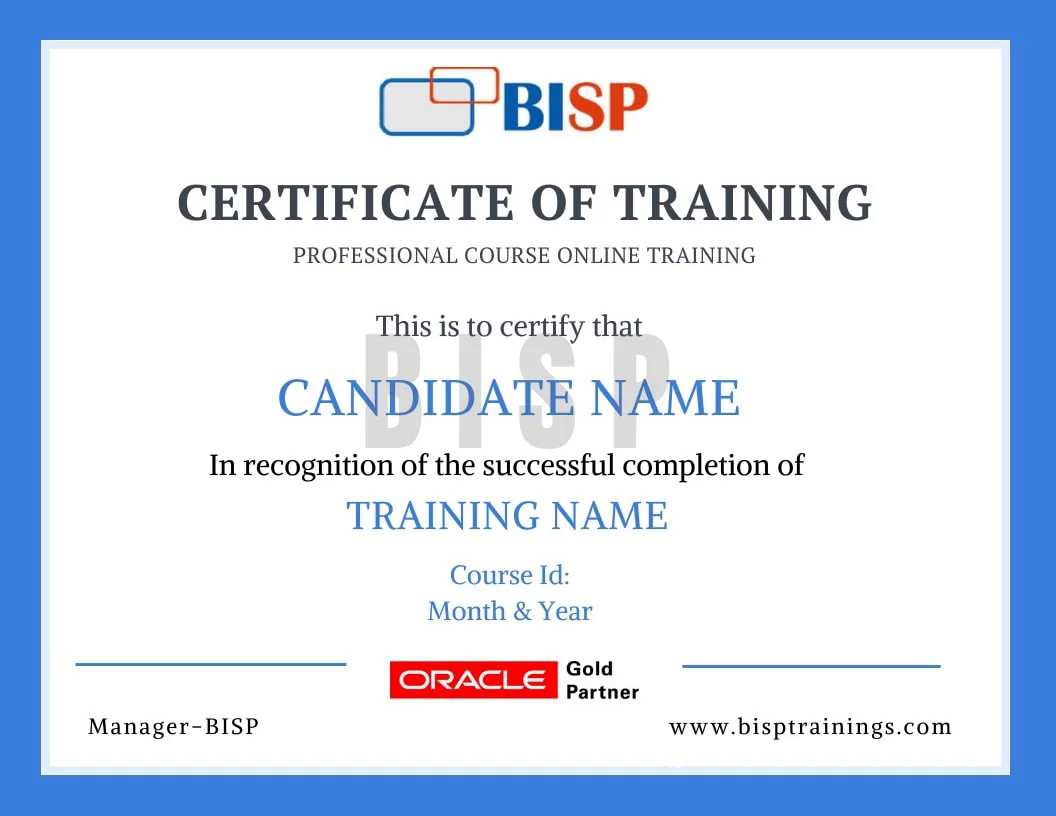
Certificate of completion
Earn an industry-recognised BISP Trainings certificate when you finish the course.
Verifiable certificate with a unique ID
Shareable on LinkedIn & your resume
Recognised by our hiring partners
Frequently asked questions
Everything you need before you enroll.
Can I attend a demo session before enrollment?
Yes. You may attend a demo class before enrollment for training quality evaluation, and interact one-to-one with the trainer for any specific requirement.
Can you schedule training as per my availability?
Yes. We discuss it with the trainer and schedule the training at a convenient time for you.
What if I miss a class?
You get the recorded session. You may also retake the whole training multiple times within a 6-month period with the same trainer.
Is there live project training?
Yes. The curriculum includes real-time scenarios and live project modules, with the trainer explaining every topic end-to-end.
How can I pay for the course?
Enroll securely via the payment gateway on this page using card, UPI or net-banking. EMI options are available.
More queries?
Call us at +91 769-409-5404, or write to support@bisptrainings.com.
 +91 769-409-5404